Archive for the ‘Digital media’ Category

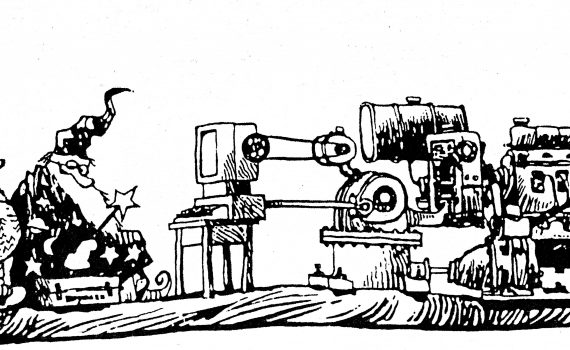
Gee, Brain, what are we going to do tonight?

Tuesday, June 22nd, 2010

The topics and books that were the focus of my principal panel at this year’s Printers Row Lit Fest continue to compel the attention of writers, reviewers and journals.

Technology Panel, Printers Row Lit Fest, 6/13/2010
BookTV.org video of Printers Row technology panel

Sunday’s New York Times Book Review, for instance, held a highly complimentary review of Tom Bissell’s “Extra Lives: Why Video Games Matter.” In the Business section, Steven Johnson took mild exception to some of the premises in Nicholas Carr’s “The Shallows” in a piece called “Yes, People Still Read, but Now It’s Social.” And Carr’s busy blog, Rough Type, pointed me to the online version of the latest Nieman Reports, where Jack Fuller shares part of what he learned in researching and writing “What Is Happening to News” in a piece entitled “Feeling the Heat: The Brain Holds Clues for Journalism.” (Nieman also includes a link to Chapter 6 of the book, one of those I’ve been teaching at Medill this past academic year.)

In short, we’re long on discussion of the impact of technology on our cognitive abilities; of the continuing evolution of narrative; and of the changes wrought in and on our culture by the various media revolutions of the past 20 years. You can get a flavor by watching (all or some of) C-SPAN’s 47-minute video from Printers Row, available by clicking on the photo at right.

I can’t end this particular linkfest without doubling back yet again to the NYT and its magazine cover story Sunday about a computer system that has been built to play “Jeopardy!” The interactive simulation that accompanies the online version was nearly as compelling as the article … enough so that I didn’t get distracted while playing it (nor, come to think of it, was I distracted while reading. This is a good sign). Watching “Jeopardy!” today after having read the piece was to be reminded of just how tricky those clues really are, and what a feat of programming it is to “teach” a machine to parse them out.

The Brain

"The same thing we do every night, Pinky: Try to take over the world."

If I were so inclined, I suppose I could worry that by the time an IBM system is ready to have a real conversation with a human being, all the available humans will have, in Carr’s memorable construction, outsourced their memories to Google. For another day.

Smarter? Dumber? Distracted? Enthralled? Find out Sunday!

Friday, June 11th, 2010

Back in the summer of 2008, the cover of The Atlantic asked us, quite pointedly: “Is Google Making Us Stoopid?” Inside, Nicholas Carr provided an overview of “what the Internet is doing to our brains”; from the vantage of June 2010, I would say that an Internet meme had been born. At least, as I prepare for a panel at Sunday’s Printers Row Lit Fest in Chicago with Carr, Jack Fuller, and Tom Bissell, it sure feels like a meme – and you can find out whether you agree by watching the panel on CSPAN2′s BookTV, live at 1 p.m. Central.

The question and its answers actually didn’t show up everywhere all at once.  Exactly one year later, The Atlantic included coverlines that asked, “Is Google Actually Making Us Smarter?” Inside, Jamais Cascio made the case for “augmented cognition”; if a battle had not been joined, at least another voice had joined the discussion.

51MoYnOjelL._SL500_AA300_About the same time, I first heard from Fuller, my friend and ex-Tribune Co. colleague, about the book he had been working on, an exploration of what neuroscience can tell us about why people respond to today’s media the way they do. As I wrote here last year, Jack allowed me to read the book in typescript, and I since have had him share his ideas with two groups of Medill graduate students. His book, What Is Happening to News: The Information Explosion and the Crisis in Journalism, was published in June. Feel free to link off to Amazon and buy a copy; while you wait for it to arrive, here is a link to an excerpt in the Spring 2010 issue of Dædalus, the journal of the American Academy of Arts & Sciences. (I recommend that whole issue highly too; called “On the Future of News,” it was edited by my Medill colleague Loren Ghiglione.)

And then the deluge.

Source: Computer Industry Almanac, via WSJ.com

A book had grown out of Carr’s Atlantic piece: The Shallows: What the Internet Is Doing to Our Brains was being published in June, just in time for Printers Row.  And when I picked up The Wall Street Journal last Saturday (June 5), the “Saturday essay” on the front page of Weekend Journal was given over to a point-counterpoint between Carr and the estimable Clay Shirky, who, lo and behold, has a new book too: Cognitive Surplus: Creativity and Generosity in a Connected Age.

And there was still more: On Monday, Page One of the New York Times….plus two entire open jump pages…addressed one slice of these issues with “Hooked on Gadgets, and Paying a Mental Price.” “Your Brain on Computers,” said the logo that ran with the story, “The Information Addiction.” No real point-counterpoint here: “paying a price” was the focus, complete with a box of warning signs to tell you if you are “too absorbed in technology”: “Have you ever lied about or tried to hide how long you’ve been online?” (Not me, but maybe the mother in FoxTrot…..)

So there’s plenty to talk about Sunday, including “Extra Lives: Why Video Games Matter,” by Bissell. Does spending 80 hours playing a particular console video game fit into that box of “too absorbed”?  (“These days,” he writes in Chapter Nine, ” I play video games in the morning, play video games in the afternoon, and spend my evenings playing video games. . . .I woke up this morning at 8 a.m. fully intending to write this chapter. Instead, I played Left 4 Dead until 5 p.m.”

Shirky, who won’t be in Chicago Sunday, with his “cognitive surplus” holds that diverting even a tiny fraction of consumers’ attention away from content consumption, largely via television, to participation and creation “can create enormous positive effects.”  Carr, who will be there, worries (among other things) about the decline in diversity of ideas and opinion that flows from too much choice. And Fuller explains from his research why neurobiology dictates that the way we are wired both makes us focus on the sensational and fatally disrupts the “Standard Professional Model” of journalism.

We should have an interesting time, so come on down.  Or find us on BookTV, where the panel will be followed by a call-in segment.

A day with Northwestern in Evanston

Friday, March 12th, 2010

So it has been a month since I last surfaced here, during which time my current graduate class, “How 21st Century Media Work,” has been driving steadily toward its conclusion: a discussion this coming Monday of Ken Auletta’s Googled: The End of the World as We Know It. Along the way, a clear highlight was the Monday where we held two moot court sessions, with teams of students assigned to argue different points of view on editorial outsourcing and on so-called* “paid content” strategies.

Schedule, A Day with Northwestern in Evanston 2010

Schedule, A Day with Northwestern in Evanston 2010

We pause in this rapidly concluding winter term to mention that I was asked to deliver a lecture at the annual “Day with Northwestern in Evanston” in April. Looks like, even if (especially if) you don’t want to listen to me, it’s a really interesting lineup of presenters, with keynotes by NU President Morton Schapiro and the jazz musician / NU professor Victor Goines.

The brochure says the committee looks for presenters with a “proven track record in the world at large, teaching ability, and relevance to today’s audience.”  Hope I can live up to that.

We now return to our regularly scheduled academic pursuits.


*All uses of “so-called” in The next miracle are dedicated to Jerome Holtzman, longtime dean of the nation’s baseball writers and legendary portable-computer student of mine, who used the so-called hyphenated adjective in 484 different Tribune stories between 1981 and 1999.

The technological octogenarian

Sunday, February 7th, 2010
A man, a plan, a canal ... er, an iPhone and Facebook.

A man, a plan, a canal ... er, an iPhone and Facebook.

My father turned 80 on Saturday, and my sister and I and our spouses went out to The Holmstad, my parents’ retirement community in Batavia, for the occasion. Shortly after 5, we were in the Holmstad dining room, the 6 of us armed with our 5 iPhones and high expectations for a festive meal.

Festive meals can, of course, take a while to arrive; so, as photo opportunities go, the one at right was way easier to seize than most. When I grabbed this image with my iPhone camera, I suspected that all I had to do was write the right caption, upload it to Facebook, and wait for my thousand or so Facebook friends to decide if they, too, found it interesting.

“Dad checks Facebook on his iPhone while waiting for 80th birthday dinner to arrive….”

It was just a few minutes after 5 p.m. By the time we got home from Symphony Center (where we went after the birthday bash ended), it had more interaction than any other single thing I’d ever posted on Facebook. “Awesome,” wrote Don. “Dad rocks,” noted Marie. “So that’s the old block off of which you are a chip,” observed Eric.

And then there were all the folks merely clicking Facebook’s thumbs-up “Like” icon. It should be noted that many of them don’t even know him!

It had already been a big day online in Owen World; a very complimentary link from Scot McKnight’s popular beliefnet.com blog, “Jesus Creed,” was sending my Feb. 27 essay on past and future literary artifacts into the top 5 of my posts over the last year. (Scot drove about 4% of my overall traffic in 2009, and at this rate he’s going to achieve his tongue-in-cheek goal of sending me more readers than does Northwestern.)

So is an octogenarian iPhone-ing Facebooker really all that noteworthy? As Linda observed at home tonight, people born in 1930 have had to adapt to changes that are in many ways more dramatic and less incremental then any of us younger whippersnappers. Television, for one. Church-run retirement homes with waitstaffs and Starbucks counters, for two.

So what are you waiting for, gentle readers? Get your dads and moms their own smart phones and social network accounts. And then send them to owenyoungman.com.

Happy birthday, Dad.

Life at the confluence

Saturday, January 23rd, 2010
The prototypical confluence

The prototypical confluence

It was a regular, and solemn, invocation for Monday Night Football in the years when the Pittsburgh Steelers turned up there as often as ABC and the NFL could manage it: Howard Cosell, in his fullest declamatory splendor, telling America that he and we would spend the next several hours “at the confluence of the Al-le-ghe-ny and Mo-non-ga-he-la Rivers” – the origin of the Ohio River, and therefore the very eponym of Three Rivers Stadium.

There are a couple of football games this weekend that don’t include the Steelers, but we are spending the end of January at a confluence nonetheless.  Two mighty rivers of ink are flowing together, inexorably, even as we speak: that which has been spilled in anticipation of the Apple tablet, and that which has been spilled in anticipation of the emergence of a coherent strategy for paid news content on the World Wide Web. For a handy list o’ links that should satisfy your need to drown in either river, visit the Nieman Journalism Lab for Mark Coddington’s week in review.

Perhaps it was when Bill Keller, editor of the NYT, talked about an “impending Apple tablet” to his staff in October that the stories became inevitably linked.  But, once the Times sketchily sketched out the state of its sketchy plans on Wednesday morning, we had to wait less than 24 hours for the heartwarming Wall St. Journal headline, “Apple Sees New Money in Old Media.”

In between – actually, just a few minutes after the Times announcement on Wednesday – I was in front of a class of first-quarter Medill graduate students, introducing them to some of the ideas that I flesh out further in my current class, “How 21st Century Media Work.” The Q&A centered not on the Times, but on the larger question of finding the money to support the journalism they feel called to do.

As a matter of fact, my answers dipped a toe into each of the merging rivers.

  • I do expect to see models for paid content emerging, and this year; some will be for-profit (GlobalPost), some low-profit (Chicago News Cooperative), some nonprofit and intentionally so (Texas Tribune).  They will have in common a focus on what their users find valuable, not their managers.
  • I do expect that many new devices will carry with them ways to extract revenue in exchange for the convenience or other value they bring; the media’s battle for desktop revenue will be miserable, but the chance for different models to flourish in the palm of your hand seem high.

Meanwhile, it’s back to waiting – till 2011 for the debut of the Times pay wall; till next Wednesday for whatever it is that Apple wants to tell us. Hey, Vladimir!  Hey, Estragon! Can I wait alongside you?

cropgodot

So Twitter ‘will endure’?

Sunday, January 3rd, 2010

(Adapted from a post to the internal discussion board for my winter 2010 Medill course, “How 21st Century Media Work”)

“I’m convinced Twitter is here to stay,” David Carr writes in Sunday’s New York Times. “And I’m not alone.”

I’m thinking he’s probably right, and for the same reason: “the real value of the service is listening to a collective voice.”

It didn’t start that way for me any more than it did for Carr. It was July 16, 2007, when the Tribune’s Brad Moore told me about a new text-messaging service that RedEye had started to play with. He was reporting to me as its general manager then, and his folks were doing their best to stay on top of communication trends that its twentysomething readers were starting to embrace.

As it happened, I wouldn’t even join Facebook till August of that year, and FriendFeed, Fark, and Digg were even further in the future. Anyway, I signed up, though I didn’t get around to “tweeting” for another month. And it wasn’t until 2008, when the interns that I’d hired to build the Tribune’s social media profile started to show how Facebook + Twitter + Digg = Pageviews, that it dawned on me that those 140-character messages might be a big deal. So I opened a second account — @YoungOwen, the one I’m still using today, since I have been unsuccessful in getting Twitter to untether my first one from my extinct Tribune mobile phone.

And sure enough, I’ve learned enough from tweeting and reading other people’s tweets to see that, like fax machines and filing cabinets, this service is something that’s not going away. As Carr observes, it has become part of the infrastructure; he quotes Clay Shirky: “Anything that is useful to both dissidents in Iran and Martha Stewart has a lot going for it.”

It goes (almost) without saying that the precise business model hasn’t quite emerged. But let me be the one millionth person to note that countless companies are piggybacking on it, mining the real-time “statusphere” or “Twitterstream” to keep track of their brands, promote themselves, or find potential customers. All of those uses are applicable to journalists and media companies as well as technologists and gossips.

It is a peculiar and arcane skill, tweeting something that might be of interest to people you don’t know (which can happen all the time with the right #hashtag). But since journalists need to do that nearly every day in their “real lives,” it seems also to be a useful one.

If you’re not on Twitter, you could do worse than to follow Carr (@carr2n) and the nine users he highlights. You might well wind up deciding to tweet what you learn.

It’s an e-reader! No, it’s a tablet! No, it’s . . . a means to an end

Sunday, December 27th, 2009

a30_businessIt seems that one of the questions I got asked most frequently in 2009 – at weddings, in email, in the church narthex, at Northwestern – was some version of “Should I get a Kindle?”  Even people who aren’t sure assume that I have one (and indeed, thanks to the generosity of friends, I have a couple).

The most recent version of the query came from Tribune literary editor Liz Taylor, who wondered if I could write a piece for the Printers Row pages of the Saturday Tribune on “why you use it, and maybe some tips . . . but as a WORD person, who loves books no matter what the form.” Well, sure. You can see the result, from the Dec. 26 edition, here.

Meanwhile, it seems that there were nearly as many articles on e-readers published this Christmas season as there were books to consume on them.  Christmas morning, for instance, the Trib business section reported on shortages and / or delayed launches of several Kindle competitors; on Christmas Eve morning the NYT’s “Bits” blog used an interview with Jeff Bezos and some data mining of customer comments to lay out a reason why all those competitors were rushing to get into the market.  It’s getting to the point that covering e-readers is like covering presidential politics: lots of focus on the horse race, very little on either the technology or the use case.

Which is why I probably enjoyed the Economist’s Dec. 12th piece, “Read all about it,” more than most.  It’s mostly about the display technology behind the readers; as the piece’s pullout summary puts it, “Readers of electronic books must choose between long battery life or vibrant, living colour. Could they have both?”  This is the place to go if you want to read about choleristic LCD’s and electophoretic displays, among other contenders to provide an answer to that question . . . while responsibly pointing out that “in the history of ingenious display technologies, only a handful have ever made it into mass production.”

(more…)

This is your brain. This is your brain on Twitter.

Thursday, October 1st, 2009

My colleague Ellen Shearer posted a link to the Medill faculty listserv yesterday  about a recent academic study in Scotland with a headline-grabbing conclusion.  In fact, let me quote the headline from the Telegraph:

Facebook ‘enhances intelligence’ but Twitter ‘diminishes it’, claims psychologist

Dr. Tracy Alloway, from the University of Stirling in Scotland, did the study with 11- to 14-year-olds. It indicates that, more specifically,

Playing video war games and solving Sudoku may have the same effect as keeping up to date with Facebook . . . But text messaging, micro-blogging on Twitter and watching YouTube were all likely to weaken ”working memory.”

”On Twitter you receive an endless stream of information, but it’s also very succinct,” said Dr. Alloway. ”You don’t have to process that information. Your attention span is being reduced and you’re not engaging your brain and improving nerve connections.”

This matter of how the brain processes information is of great interest to many people. One of them is my former Tribune boss Jack Fuller, who in fact has devoted the last several years to this topic himself, particularly to the piece that explores how people absorb and understand news. Indeed, he has a book coming out next April from the University of Chicago, What Has Been Happening to News, that explores the topic in depth.

He allowed me to read it in typescript, and I won’t steal of any of its thunder now.  But more than two years ago, in a Tribune Perspective piece entitled “Reasoning With Feeling: Boosters of the Internet see it as a perfect forum for reasoned debate. But neuroscience tells us that emotions keep popping up,” he began to explore what he was learning.

Neuroscience came into its own at about the same time the Internet did. In the past couple decades, new techniques for peering into brain processes haveled to extraordinary advances in understanding the mind. These have profoundly refigured the picture that came down to us from philosophers and early generations of psychologists.

One area is particularly fascinating: The new model of the mind offers important but unsettling insights into why people respond to today’s media as they do.

The archived piece is worth a spin (though the parser that put it up on the Tribune archive site does a lousy job with word spacing every 80 characters or so). Essentially, Jack is exploring a different issue than the Scottish researcher: not the diminishment of intelligence, but the primacy of emotion “[w]hen the brain is challenged to process very difficult information – let’s say, multitasking amid an overload of information.”

Come the spring, you will want to read Jack’s book.  In the meantime, however, I guess I will feel good that I spend more time on Facebook than either Twitter or YouTube.

Though you could argue it might be a better demonstration of intelligence, diminishing or otherwise, to spend less time with both.