Archive for the ‘By ORY’ Category

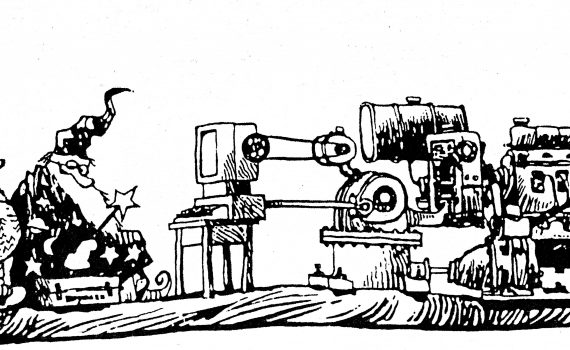
Gee, Brain, what are we going to do tonight?

Tuesday, June 22nd, 2010

The topics and books that were the focus of my principal panel at this year’s Printers Row Lit Fest continue to compel the attention of writers, reviewers and journals.

Technology Panel, Printers Row Lit Fest, 6/13/2010
BookTV.org video of Printers Row technology panel

Sunday’s New York Times Book Review, for instance, held a highly complimentary review of Tom Bissell’s “Extra Lives: Why Video Games Matter.” In the Business section, Steven Johnson took mild exception to some of the premises in Nicholas Carr’s “The Shallows” in a piece called “Yes, People Still Read, but Now It’s Social.” And Carr’s busy blog, Rough Type, pointed me to the online version of the latest Nieman Reports, where Jack Fuller shares part of what he learned in researching and writing “What Is Happening to News” in a piece entitled “Feeling the Heat: The Brain Holds Clues for Journalism.” (Nieman also includes a link to Chapter 6 of the book, one of those I’ve been teaching at Medill this past academic year.)

In short, we’re long on discussion of the impact of technology on our cognitive abilities; of the continuing evolution of narrative; and of the changes wrought in and on our culture by the various media revolutions of the past 20 years. You can get a flavor by watching (all or some of) C-SPAN’s 47-minute video from Printers Row, available by clicking on the photo at right.

I can’t end this particular linkfest without doubling back yet again to the NYT and its magazine cover story Sunday about a computer system that has been built to play “Jeopardy!” The interactive simulation that accompanies the online version was nearly as compelling as the article … enough so that I didn’t get distracted while playing it (nor, come to think of it, was I distracted while reading. This is a good sign). Watching “Jeopardy!” today after having read the piece was to be reminded of just how tricky those clues really are, and what a feat of programming it is to “teach” a machine to parse them out.

The Brain

"The same thing we do every night, Pinky: Try to take over the world."

If I were so inclined, I suppose I could worry that by the time an IBM system is ready to have a real conversation with a human being, all the available humans will have, in Carr’s memorable construction, outsourced their memories to Google. For another day.

Smarter? Dumber? Distracted? Enthralled? Find out Sunday!

Friday, June 11th, 2010

Back in the summer of 2008, the cover of The Atlantic asked us, quite pointedly: “Is Google Making Us Stoopid?” Inside, Nicholas Carr provided an overview of “what the Internet is doing to our brains”; from the vantage of June 2010, I would say that an Internet meme had been born. At least, as I prepare for a panel at Sunday’s Printers Row Lit Fest in Chicago with Carr, Jack Fuller, and Tom Bissell, it sure feels like a meme – and you can find out whether you agree by watching the panel on CSPAN2′s BookTV, live at 1 p.m. Central.

The question and its answers actually didn’t show up everywhere all at once.  Exactly one year later, The Atlantic included coverlines that asked, “Is Google Actually Making Us Smarter?” Inside, Jamais Cascio made the case for “augmented cognition”; if a battle had not been joined, at least another voice had joined the discussion.

51MoYnOjelL._SL500_AA300_About the same time, I first heard from Fuller, my friend and ex-Tribune Co. colleague, about the book he had been working on, an exploration of what neuroscience can tell us about why people respond to today’s media the way they do. As I wrote here last year, Jack allowed me to read the book in typescript, and I since have had him share his ideas with two groups of Medill graduate students. His book, What Is Happening to News: The Information Explosion and the Crisis in Journalism, was published in June. Feel free to link off to Amazon and buy a copy; while you wait for it to arrive, here is a link to an excerpt in the Spring 2010 issue of Dædalus, the journal of the American Academy of Arts & Sciences. (I recommend that whole issue highly too; called “On the Future of News,” it was edited by my Medill colleague Loren Ghiglione.)

And then the deluge.

Source: Computer Industry Almanac, via WSJ.com

A book had grown out of Carr’s Atlantic piece: The Shallows: What the Internet Is Doing to Our Brains was being published in June, just in time for Printers Row.  And when I picked up The Wall Street Journal last Saturday (June 5), the “Saturday essay” on the front page of Weekend Journal was given over to a point-counterpoint between Carr and the estimable Clay Shirky, who, lo and behold, has a new book too: Cognitive Surplus: Creativity and Generosity in a Connected Age.

And there was still more: On Monday, Page One of the New York Times….plus two entire open jump pages…addressed one slice of these issues with “Hooked on Gadgets, and Paying a Mental Price.” “Your Brain on Computers,” said the logo that ran with the story, “The Information Addiction.” No real point-counterpoint here: “paying a price” was the focus, complete with a box of warning signs to tell you if you are “too absorbed in technology”: “Have you ever lied about or tried to hide how long you’ve been online?” (Not me, but maybe the mother in FoxTrot…..)

So there’s plenty to talk about Sunday, including “Extra Lives: Why Video Games Matter,” by Bissell. Does spending 80 hours playing a particular console video game fit into that box of “too absorbed”?  (“These days,” he writes in Chapter Nine, ” I play video games in the morning, play video games in the afternoon, and spend my evenings playing video games. . . .I woke up this morning at 8 a.m. fully intending to write this chapter. Instead, I played Left 4 Dead until 5 p.m.”

Shirky, who won’t be in Chicago Sunday, with his “cognitive surplus” holds that diverting even a tiny fraction of consumers’ attention away from content consumption, largely via television, to participation and creation “can create enormous positive effects.”  Carr, who will be there, worries (among other things) about the decline in diversity of ideas and opinion that flows from too much choice. And Fuller explains from his research why neurobiology dictates that the way we are wired both makes us focus on the sensational and fatally disrupts the “Standard Professional Model” of journalism.

We should have an interesting time, so come on down.  Or find us on BookTV, where the panel will be followed by a call-in segment.

Have use case, will time-travel: An interview

Friday, April 23rd, 2010

Once again we come to “Talk Like Shakespeare” Day in Chicago. This time around, not only are the city literati asking us to use thee’s and thou’s where appropriate, but also to consider submitting items – by email, lamely enough – for a nascent “Blog Like Shakespeare” effort.

What, they didn’t notice last year’s interview with the Bard here on “The next miracle”?

Anyway, I got such good stuff from Will last year about current trends that I figured I ought to go back and ask a few questions related to topics that have surged into the public consciousness since his last birthday. Herewith thou shalt find a transcript:

mapdataTNM: Nice to see you again. Did you manage to take a walk through Northwestern’s Shakespeare Garden on your way over, as I suggested?

WS: Daffodils,
That come before the swallow dares, and take
The winds of March with beauty.

TNM: Yes, there are a few hanging on, even though it’s nearly May. Glad you noticed them. Anyway, today I mostly wanted to show you an iPad and get your early thoughts. So if you can hang on a second while I log into the network…

WS: That I might touch!

TNM: Well, sure…

WS (chuckling): How poor are they that hath not patience! (picking it up) I know from whence this same device proceeds.

TNM: There’s no mistaking something from Apple, is there? So many people think their products are just plain fun to use.

WS: No profit grows where is no pleasure ta’en.

TNM: I’ll remember that. Actually, I know lots of media companies that would do well to remember that. OK, let’s start your assessment with the iBooks and Kindle apps. How do you like reading your own words on something like this? By the way, Shakespeare Pro for the iPad cost me $19.99.

WS (to himself): Knowing I lov’d my books, he furnish’d me From mine own library with volumes that I prize. (aloud, after a pause) Trust not my reading, nor my observations, Which with experimental seal doth warrant the tenure of my book.

TNM: You’re not getting off that easily.

WS (reluctantly): I will hereupon confess I am in love.

TNM: You’re kidding. You like this better than a “real” book?

WS: Is this not a lamentable thing, that of the skin of an innocent lamb should be made parchment?

TNM: Actually, these days we use wood pulp.

WS: I beseech you be not so phlegmatic.

TNM: Well, I am the reporter here. You want to try something else?  The video player, maybe? (Skipping past Lady Gaga, I queue up a little Miley Cyrus.)

WS: (watching, and now beginning to talk directly to the iPad): Their images I lov’d I view in thee, and thou (all they) has all the all of me.

TNM: Hmm, maybe not the greatest idea. Want to play with Twitter? (Will shakes his head, puts down the device and backs slowly out of the room.)

WS: The time is out of joint.

TNM: See you next year?

The technological octogenarian

Sunday, February 7th, 2010
A man, a plan, a canal ... er, an iPhone and Facebook.

A man, a plan, a canal ... er, an iPhone and Facebook.

My father turned 80 on Saturday, and my sister and I and our spouses went out to The Holmstad, my parents’ retirement community in Batavia, for the occasion. Shortly after 5, we were in the Holmstad dining room, the 6 of us armed with our 5 iPhones and high expectations for a festive meal.

Festive meals can, of course, take a while to arrive; so, as photo opportunities go, the one at right was way easier to seize than most. When I grabbed this image with my iPhone camera, I suspected that all I had to do was write the right caption, upload it to Facebook, and wait for my thousand or so Facebook friends to decide if they, too, found it interesting.

“Dad checks Facebook on his iPhone while waiting for 80th birthday dinner to arrive….”

It was just a few minutes after 5 p.m. By the time we got home from Symphony Center (where we went after the birthday bash ended), it had more interaction than any other single thing I’d ever posted on Facebook. “Awesome,” wrote Don. “Dad rocks,” noted Marie. “So that’s the old block off of which you are a chip,” observed Eric.

And then there were all the folks merely clicking Facebook’s thumbs-up “Like” icon. It should be noted that many of them don’t even know him!

It had already been a big day online in Owen World; a very complimentary link from Scot McKnight’s popular beliefnet.com blog, “Jesus Creed,” was sending my Feb. 27 essay on past and future literary artifacts into the top 5 of my posts over the last year. (Scot drove about 4% of my overall traffic in 2009, and at this rate he’s going to achieve his tongue-in-cheek goal of sending me more readers than does Northwestern.)

So is an octogenarian iPhone-ing Facebooker really all that noteworthy? As Linda observed at home tonight, people born in 1930 have had to adapt to changes that are in many ways more dramatic and less incremental then any of us younger whippersnappers. Television, for one. Church-run retirement homes with waitstaffs and Starbucks counters, for two.

So what are you waiting for, gentle readers? Get your dads and moms their own smart phones and social network accounts. And then send them to owenyoungman.com.

Happy birthday, Dad.

“All passes. Art alone endures.”

Wednesday, January 27th, 2010

51q7RzjhPKL._SL500_AA240_Monday night on the way home from Northwestern, I stopped at the local Borders in order (finally) to act on a pre-Christmas recommendation from Tribune literary editor Liz Taylor: to purchase A New Literary History of America, edited by Greil Marcus and Werner Sollors. Before long I was reading about The Wonderful Wizard of Oz, The Great Gatsby, The Southern Harmony . . . and there were still a thousand pages to pick from. (This timeline is a great thing to scan for a sense of this remarkable compendium of new writing. Fifty bucks list, but with a gift card and a coupon it seemed like a good thing to actually pick up in a bricks-and-mortar store.)

I didn’t want to overdose, though, so after a while I set it down and belatedly picked up Sunday’s edition of the New York Times Book Review. In so doing, I thought I would be transitioning from the past to the present, in addition to reducing the weight of the analog object in hand.

But no.

More than meets the eye, or the cursor for that matter.

More than meets the eye, or the cursor for that matter.

As it happened, the Book Review was upside down in my stack of unfinished reading, and on the back page was the monthly ad from Bauman Rare Books in New York City. I usually do spend a couple of seconds glancing at the store’s featured offerings, but this week it stopped me cold. And I quote:

  • John Milton: Paradise Lost, 1668. “One of the greatest, most noble and sublime poems which either this age or nation has produced.” First edition of Milton’s masterpiece, in contemporary calf.
  • Mark Twain: The Adventures of Huckleberry Finn, 1885. “All modern literature comes from one book by Mark Twain. It’s the best book we’ve had” (Ernest Hemingway). An extraordinary American rarity: Mark Twain’s own copy of Huck Finn, signed by him, in publisher’s sheep. Full first issue, one of the earliest known copies.
  • F. Scott Fitzgerald: The Great Gatsby, 1925. One of the great rarities in American literature: first edition in the first-issue dust jacket of one of the most desirable works in modern literature.

It’s not like I had set out to muffle the drumbeats in advance of what turned out to be the Apple iPad. And maybe it was because I had just been reading about Scott and Zelda and Gatsby and Nick Carraway in the New Literary History. For whatever proximate cause, I was thinking not just about the titles or the authors or the cultural resonance of either, but also about the form factor that is part of what transformed these objects into not just collectibles, but representations of the power of words, and of ideas.

At some point, should the Great American Novel ever be written, some substantial number of its readers will absorb it in a form utterly unconnected to such an artifact. Afflicted as they are by permanent partial attention disorder, they will labor doggedly to identify and retain “the good parts” across the multiple brief sessions of hard-won reading time they are able to devote to it. And when their children’s children come across it 30 years after acing their own 21st Century Literature classes, what will be the touchstone that summons up what two sentences on a first edition of Gatsby does today?

Over the stage at Norton Memorial Hall, the opera house on the campus of the Chautauqua Institution, are the words “All passes – Art alone endures.” As a lad, I would annually contemplate this translation from the poet Théophile Gautier (Tout passe. L’art robuste / Seul a l’éternité . . .) as I sat in services or meetings during a week-long family retreat held by the Covenant churches of what was then called the Middle East Conference. The speakers and conferees, of course, had a substantial disagreement with the details of that sentiment, but there it was, overhead, while they spoke and sang to different points below.

No, I didn’t know then it was Gautier, any more than I knew before noon Wednesday that the Apple tablet would be called the iPad, any more than I am able to answer my own question immediately above. I’m already reading on a Kindle and an iPhone; undoubtedly I will before long be reading on an iPad and a Que. But, a digital fellow though I may be, I find myself clinging to an emotional attachment to Bauman’s trove of objects that I never will have or hold.

No, they’re not the art, those objects; Hemingway and Fitzgerald do not endure because of their first-edition dust jackets. But I want to hope that the flash and dazzle of the Next Big Thing does not get in the way of the establishment of the Next Important Thing. And these days, I’m not feeling all too sure.

Life at the confluence

Saturday, January 23rd, 2010
The prototypical confluence

The prototypical confluence

It was a regular, and solemn, invocation for Monday Night Football in the years when the Pittsburgh Steelers turned up there as often as ABC and the NFL could manage it: Howard Cosell, in his fullest declamatory splendor, telling America that he and we would spend the next several hours “at the confluence of the Al-le-ghe-ny and Mo-non-ga-he-la Rivers” – the origin of the Ohio River, and therefore the very eponym of Three Rivers Stadium.

There are a couple of football games this weekend that don’t include the Steelers, but we are spending the end of January at a confluence nonetheless.  Two mighty rivers of ink are flowing together, inexorably, even as we speak: that which has been spilled in anticipation of the Apple tablet, and that which has been spilled in anticipation of the emergence of a coherent strategy for paid news content on the World Wide Web. For a handy list o’ links that should satisfy your need to drown in either river, visit the Nieman Journalism Lab for Mark Coddington’s week in review.

Perhaps it was when Bill Keller, editor of the NYT, talked about an “impending Apple tablet” to his staff in October that the stories became inevitably linked.  But, once the Times sketchily sketched out the state of its sketchy plans on Wednesday morning, we had to wait less than 24 hours for the heartwarming Wall St. Journal headline, “Apple Sees New Money in Old Media.”

In between – actually, just a few minutes after the Times announcement on Wednesday – I was in front of a class of first-quarter Medill graduate students, introducing them to some of the ideas that I flesh out further in my current class, “How 21st Century Media Work.” The Q&A centered not on the Times, but on the larger question of finding the money to support the journalism they feel called to do.

As a matter of fact, my answers dipped a toe into each of the merging rivers.

  • I do expect to see models for paid content emerging, and this year; some will be for-profit (GlobalPost), some low-profit (Chicago News Cooperative), some nonprofit and intentionally so (Texas Tribune).  They will have in common a focus on what their users find valuable, not their managers.
  • I do expect that many new devices will carry with them ways to extract revenue in exchange for the convenience or other value they bring; the media’s battle for desktop revenue will be miserable, but the chance for different models to flourish in the palm of your hand seem high.

Meanwhile, it’s back to waiting – till 2011 for the debut of the Times pay wall; till next Wednesday for whatever it is that Apple wants to tell us. Hey, Vladimir!  Hey, Estragon! Can I wait alongside you?

cropgodot

Don and Lou, and Lou and me

Monday, January 18th, 2010
Lou Grant meets the future of newspaper technology, 1977

Lou Grant meets the future of newspaper technology, 1977

My former Tribune colleague Don Terry, who is reporting these days for the Chicago News Cooperative, has written a feature for the Columbia Journalism Review in which he views the current state of the newspaper business partly through the prism of a 32-year-old television show. As you will have surmised from the headline and image above, that show is “Lou Grant,” which for five years gave viewers a whiff of both The Front Page and the front page.

“Lou Grant” is pretty much the last TV series I ever watched, other than the Steven Spielberg-produced cartoon “Animaniacs.” That I watched it at all was an accident of scheduling: it began airing on Tuesday nights, and I was off from my job in the sports slot on Mondays, Tuesdays, and Wednesdays. That I stayed with it was probably due to the fact that its depiction the fictional Los Angeles Tribune newsroom seemed to get a lot of things right, as I was reminded first by Don’s piece, then by going to Hulu to watch the premiere episode last night.

If you’re interested, it would be far more effective to get the flavor of “Lou” from Don’s piece than to have me recreate a sliver of it, so go there (and you certainly should go there before going to Hulu. Of course, you’d expect me to say that; after all, I downloaded a Hulu player in December of 2007 but had never even fired it up).  From the remove of 32-plus years, though, I was particularly struck by the image above.

Lou is waiting to interview with an old pal for a job that he doesn’t understand will be city editor of the Tribune. Asked to wait, he turns around and comes face to screen with one of those CRT’s that, before too long, would replace the clattering typewriters in the newsroom, but for then was sitting, blank and mute, on a table outside the managing editor’s office.  He pauses.  He bends over.  He reaches to tap its keyboard. (I can’t seem to tell if it’s a Harris or an Atex or an Ontel or some other animal entirely.  He can’t seem to tell if touching it will singe his fingertips.) He looks up at the ME’s secretary, grins sheepishly, and walks away from this “machine,” as he refers to it shortly thereafter.

Before long, in the tradition of large metro newspapers everywhere, he is ensconced at the city desk without the benefit of a moment’s further training beyond that which he brought in the door minutes earlier.  He doesn’t need to be schooled in using that ungainly box, because the skills of his trade are working the phone, smelling the news, and flipping an underreported, overwritten story back at a hotshot reporter.

The good news is, those skills are still important; they are not going to come and go like the ungainly, literally dumb terminal Lou was inspecting above. (Of course, you don’t need quite as supple a wrist for the flipping part as you used to, if you’re quick on the double-click.) I’m thinking I’ll be reminded of other skills not to forget when I fire up the Hulu desktop for Episode 2, perhaps even before another couple years have passed.

The year’s miracles in review

Friday, January 1st, 2010

If you need to fill the time between now and Monday morning (or whenever you resume your normal routine), here’s your chance to make sure you didn’t miss any of last year’s most popular ruminations here at owenyoungman.com.

(Hmmm; four of the top 10 are from October, and two more are from November. I must be promoting better of late.)

Happy new year.

How America was 2-1-3′d (Oct. 6): In which we are reminded what made the LA Times the LA Times, and how the LA Times made Los Angeles, and how the LA Times sometimes made me crazy. Past tense in all cases.

There were giants . . . no, there are giants (Oct. 16): In which I hang with a variety of legends at a Tribune reunion in Greektown. As at most such events, you remember some of what you want to say, but hear mostly what others want to tell you. As at few such events, you also get to observe David Axelrod’s Secret Service detail.

The future, not the pasture (May 29): In which a gathering of Tribune alumni leads to discussions of philanthropy, public policy, health care, higher education, and journalism, more or less but not precisely in that order.

Co-operative-etition, Chicago style (Nov. 24): In which we do not look behind the scenes at the Chicago News Cooperative. Rather, we look at the choices readers had on Friday and Sunday, its debut days in the NYT.

Adventures in paid content, with actual payment (May 21): In which we begin our second foray into the world of Internet paid content, on a personal level, and display a trophy of the early Web economy.

(more…)